
Chef Knife vs Utility Knife: What Each One Is Best Used For in the Kitchen
Share:
When it comes to essential kitchen tools, the debate around chef knife vs utility knife is one of the most common—and most misunderstood.
At first glance, both knives seem similar. They’re sharp, versatile, and used daily in kitchens around the world. But in real cooking environments, they serve completely different roles. Choosing the wrong one doesn’t just slow you down—it affects precision, safety, and overall cooking efficiency.
This guide breaks down the difference between chef knife and utility knife using real-world kitchen logic, so you can confidently choose the right tool—or the right combination—for your cooking style.
What Is a Chef Knife?
A chef’s knife is the single most important tool in a well-equipped kitchen—the one knife designed to handle almost every cutting task with speed, precision, and consistency. Typically measuring 8 to 10 inches, its size, shape, and balance are engineered for efficiency, making it the go-to choice for both home cooks and professional chefs.
Key Design Features
- Wide, curved blade designed for rocking motion cutting
- Balanced weight distribution for reduced wrist fatigue
- Strong heel section for tougher ingredients
- Sharp pointed tip for precision work
Where It Performs Best in Real Cooking
- Fast vegetable chopping (onions, carrots, potatoes)
- Meat slicing and portioning
- Herb dicing in bulk preparation
- Crushing and smashing ingredients like garlic
Real Kitchen Insight
In consistent kitchen workflows, a chef knife handles 80–90% of all cutting tasks. That’s why professionals rely on it as their primary blade—it reduces switching time between tools and improves overall efficiency.
If you are building a kitchen from scratch, this is always the first knife to invest in.
What Is a Utility Knife?
A utility knife is the most underrated tool in the kitchen—smaller than a chef’s knife, but far more versatile than a paring knife. Typically ranging from 4 to 7 inches, it’s designed for tasks that require precision, control, and finesse—especially when a larger blade feels too bulky or excessive.
Think of it as the “in-between” knife:
not too big, not too small—just right for every day, detail-focused prep.
Key Design Features
- Narrow, slim blade for precision control
- Lightweight structure for easy handling
- Straight or slightly curved edge for clean slicing
- Ideal balance for small-scale tasks
Where It Performs Best in Real Cooking
- Slicing fruits like apples, citrus, and berries
- Cutting sandwiches and soft foods
- Trimming small portions of meat
- Detail-based cutting and shaping tasks
Real Kitchen Insight
A utility knife becomes most valuable when a chef knife feels too large or imprecise. It reduces mistakes in delicate cutting situations where control matters more than speed.
It is not a replacement for a chef knife—it is a precision support tool.
Chef Knife vs Utility Knife: Key Differences
At a glance, both knives may seem interchangeable—but in real kitchen use, they serve very different roles. Understanding the difference isn’t about theory—it’s about how each knife behaves during actual cooking.
Here’s a deeper look at what truly separates these two essential tools:
Size & Blade Design
The most noticeable difference is size—and it affects everything else.
- Chef Knife: 8–10 inches with a wide, curved blade
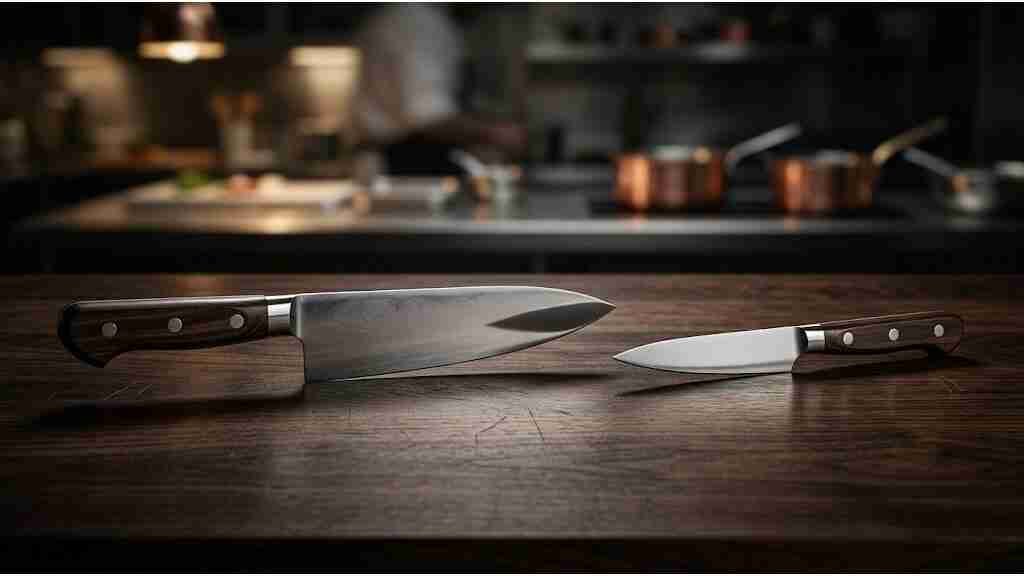
- Utility Knife: usually 4–7 inches with a narrow, straighter blade
The chef knife’s larger surface area makes it ideal for handling bigger ingredients, while the slimmer utility knife allows for tighter, more controlled cuts.
Cutting Performance
Each knife is optimized for a different type of performance:
- Chef Knife: Built for power and efficiency
- Utility Knife: Designed for accuracy and finesse
A chef knife can slice through dense vegetables, thick cuts of meat, and large quantities quickly. On the other hand, a utility knife gives you cleaner, more precise cuts when working with smaller or softer ingredients.
Versatility in the Kitchen
Both knives are versatile—but not equally.
- Chef Knife: Handles 80–90% of kitchen tasks
- Utility Knife: Handles specific, detail-oriented tasks
The chef knife is your all-purpose solution, while the utility knife plays a supporting role—stepping in where the chef knife feels oversized.
Cutting Technique
The way each knife is used is fundamentally different:
- Chef Knife: Uses a rocking motion (ideal for chopping and dicing)
- Utility Knife: Uses a straight slicing motion (ideal for clean, controlled cuts)
The curved edge of the chef knife allows fluid movement across the cutting board, while the utility knife excels in direct, linear slicing.
Control & Comfort
Comfort often depends on the task at hand.
- Chef Knife: Offers stability for larger prep, but can feel bulky for fine work
- Utility Knife: Feels lighter and easier to control, especially for beginners or detailed tasks
If you’re working in tight spaces or doing delicate prep, the utility knife naturally feels more manageable.
Ideal Use Cases
Here’s where each knife truly shines:
Chef Knife:
- Chopping onions, carrots, potatoes
- Slicing meat or poultry
- Dicing herbs in bulk
- Preparing full meals
Utility Knife:
- Slicing fruits and small vegetables
- Making sandwiches
- Trimming fat or small cuts of meat
- Precision cutting tasks
Role in Your Kitchen Setup
Think of these knives as part of a system—not competitors.
- Chef Knife: Your primary workhorse
- Utility Knife: Your precision assistant
One is built to handle volume and speed, the other to refine and perfect smaller tasks.
When to Use Each Knife
Use a Chef Knife When:
- Preparing full meals or large portions
- Chopping vegetables in bulk
- Cutting raw meat or poultry
- Working with hard or dense ingredients
Use a Utility Knife When:
- Cutting fruits or soft ingredients
- Making sandwiches or light snacks
- Trimming fat or small cuts of meat
- Performing precision detail work
Common Mistakes Buyers Make
These mistakes are extremely common among home cooks and often lead to poor kitchen performance:
- Choosing a utility knife for heavy prep work
- Assuming expensive knives always perform better
- Ignoring blade balance and handle comfort
- Buying oversized chef knives that reduce control
- Using low-quality steel that dulls quickly
- Relying on knife sets instead of essential individual knives
- Cutting on hard surfaces like glass or marble
- Neglecting regular sharpening and maintenance
In most cases, performance issues come from wrong usage—not wrong knife choice.
How to Choose the Right Knife for You
Step 1: Identify Your Cooking Style
- Frequent cooking → Chef knife is essential
- Light or occasional cooking → Utility knife supports basics
Step 2: Evaluate Comfort and Control
- Larger hands → Chef knife feels more stable
- Smaller hands → Utility knife may feel easier to control
Step 3: Understand Your Workflow
- Bulk meal prep → Chef knife priority
- Quick slicing or snacks → Utility knife support
Chef’s Knife vs Utility Knife: Final Verdict
The debate between chef’s knife vs utility knife isn’t about which is better—it’s about which is right for the job.
- The chef knife is your primary workhorse
- The utility knife is your precision assistant
Together, they create a more efficient, enjoyable cooking experience.
Why Quality Matters at Texan Knives
When investing in kitchen tools, blade quality directly impacts performance, safety, and long-term value.
Texan Knives focuses on practical, durable craftsmanship designed for real kitchen use.
Key value factors include:
- Durable steel designed for long-term edge retention
- Balanced construction for better control
- Designed for both home cooks and serious users
- Built for consistent real-world performance
The goal is not just sharpness—it is reliable everyday usability.
FAQs
What size chef knife is best for beginners?
An 8-inch chef knife is ideal. It offers the perfect balance of control, versatility, and ease of use for most home cooks.
How do I maintain my knives for long-term use?
- Keep them sharp with regular honing and occasional sharpening
- Use a wood or plastic cutting board
- Avoid dishwashers—hand wash and dry immediately
Do professional chefs use utility knives?
Yes—but as a secondary tool. Most chefs rely on a chef knife for the majority of tasks and switch to a utility knife when precision is needed.
Why does my knife get dull so quickly?
Common reasons include:
- Cutting on hard surfaces (like glass or marble)
- Poor-quality steel
- Lack of proper maintenance
Even the best knife needs regular care to stay sharp.
Should I buy a knife set or individual knives?
Most people are better off buying individual knives. Knife sets often include tools you won’t use, while investing in a quality chef knife and utility knife gives better value.
How long should a good knife last?
A high-quality knife can last 10–20 years or more with proper care. Regular sharpening and correct use make a huge difference in lifespan.

Akshaf Masroor
Is the founder of Texan Knives, a Texas-based company that makes handmade knives. With over 17 years of hands-on experience, he creates Damascus steel knives, custom designs, and runs sharpening programs. Akshaf’s knives are strong, sharp, and built for real use. Read More