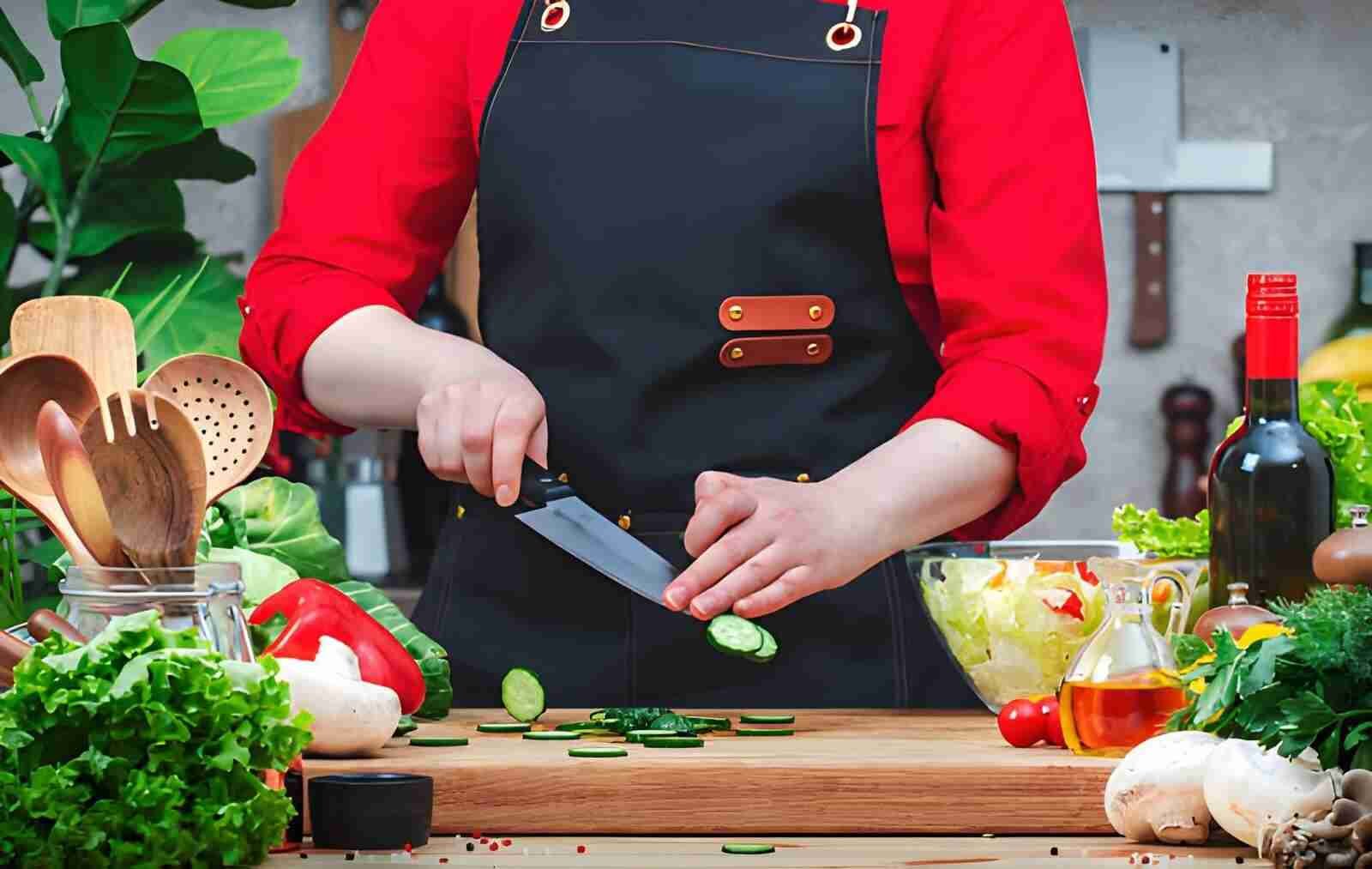
Every serious home cook reaches a turning point where beginner, mass-produced knives no longer cut it. You find yourself struggling with a dull edge, a handle that causes cramps, or a blade that feels clumsy during delicate tasks. You are ready for a professional-grade tool—a blade that feels like a natural extension of your hand, powerful yet precise.
But as you begin your search for the perfect upgrade, the ultimate culinary debate arises: The Santoku or the Chef Knife?
On one side stands the Western heavyweight—the Chef Knife: long, curved, and iconic. On the other, the Japanese-inspired Santoku: compact, nimble, and razor-sharp.
At Texan Knives, our master bladesmith Masroor has spent over 17 years hand-forging high-performance steel. He understands that choosing the right knife isn’t about following a trend; it’s about how your hand connects with the steel and how that steel interacts with your food.
This guide will dive deep into the anatomy, history, and performance of these two titans to help you decide which one deserves the “daily driver” spot on your magnetic knife strip.
1. The Santoku Knife: The Master of Precision
The word Santoku literally translates to “three virtues” or “three uses.” Historically, this refers to the knife’s proficiency in handling Meat, Fish, and Vegetables. In a more modern, technique-focused sense, it refers to its mastery of Slicing, Dicing, and Mincing.
Developed in Japan as a multi-purpose alternative to the specialized vegetable cleaver (Nakiri), the Santoku was designed for the home cook who needs efficiency in a compact package.
Anatomical Features of the Santoku
- The Sheepsfoot Blade: Unlike the pointed tip of a Western knife, the Santoku features a “sheepsfoot” spine that curves down to meet a very straight cutting edge. This design minimizes the risk of accidental piercing and maximizes the cutting surface.
- The Granton Edge: You will often notice “dimples” or scalloped divots along the side of a Santoku blade. These are Granton edges. They create small pockets of air between the steel and the food, preventing suction. This is a game-changer when slicing “sticky” items like cold potatoes, cucumbers, or raw fish.
- Thin Geometry: Santoku blades are generally thinner than Chef Knives. This allows for a much lower resistance when passing through firm vegetables like carrots or radishes.
- Weight and Balance: Because the blade is shorter (typically 5 to 7 inches) and thinner, the Santoku is incredibly lightweight. This reduces wrist fatigue during long prep sessions involving hundreds of repetitive cuts.
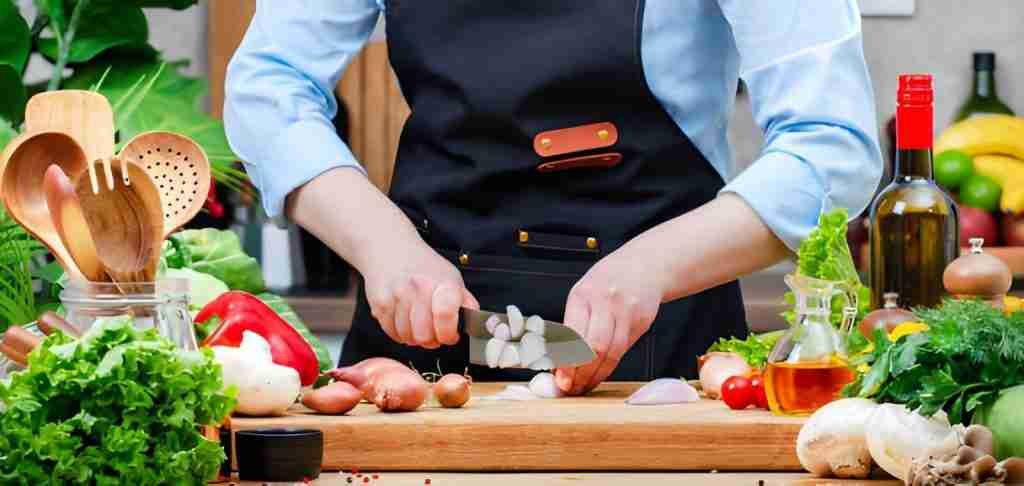
2. The Chef Knife: The Western Workhorse
The classic Western Chef Knife (often called a Cook’s Knife) is the evolution of European sword-making and butchery traditions. It is designed for volume, momentum, and versatility across a wider range of heavy-duty tasks.
Why the Chef Knife is an Industry Standard
- The Curved “Belly”: The most distinct feature of a Chef Knife is the upward curve of the blade toward the tip. This “belly” is engineered for a rocking motion. You keep the tip of the knife on the cutting board and rock the heel up and down. This is the fastest way to mince a pile of herbs or blitz through a bag of onions.
- The Bolster and Heel: Chef knives typically feature a thicker “heel” (the part of the blade closest to the handle). This provides the weight and leverage needed to chop through denser items, like the joints of a chicken or the tough skin of a butternut squash.
- Added Length: Usually ranging from 8 to 10 inches, the added length of a Chef Knife allows you to slice through large proteins—like a prime rib or a brisket—in a single, smooth stroke rather than “sawing” at the meat.
- Durability: The edge of a Western Chef Knife is usually ground to a wider angle (roughly 20 degrees). While slightly less “scalpel-like” than a Santoku, this edge is far more durable and less likely to chip if it hits a bone or a hard seed.
3. Side-by-Side Comparison: At a Glance
| Feature | Santoku Knife | Western Chef Knife |
| Origin | Japan (Post-WWII) | Europe (Germany/France) |
| Blade Length | 5″ to 7″ | 8″ to 12″ |
| Blade Shape | Flat edge, sheepsfoot tip | Curved edge, pointed tip |
| Cutting Style | Push-cut, vertical chop | Rocking motion, slicing |
| Weight | Lightweight & nimble | Heavier & robust |
| Edge Angle | 15 degrees (Ultra-sharp) | 20 degrees (Durable) |
| Best For | Precision, vegetables, fish | Heavy prep, large meats, squash |
4. The Engineering of Excellence: The Texan Knives Difference
Not all knives are created equal. If you walk into a big-box retail store, you will see knives made of stamped, soft stainless steel. These knives dull quickly, are difficult to resharpen, and often have “hollow” handles that throw off the balance.
At Texan Knives, Masroor approaches knife-making as both a science and an art. Here is why the engineering of your blade matters more than the style:
High-Carbon vs. Stainless Steel
A knife is only as good as its heat treatment. Masroor utilizes high-grade steel that strikes the perfect balance between edge retention (staying sharp) and toughness (not chipping). A Santoku needs to be hard enough to hold a 15-degree edge, while a Chef Knife needs the resilience to handle impact.
Ergonomics and Balance
If a knife is “blade-heavy,” your forearm will tire within minutes. If it is “handle-heavy,” you lose control over the tip. Masroor hand-shapes every handle to ensure the balance point sits right where your thumb and index finger grip the blade (the pinch grip). This makes the knife feel lighter than it actually is.
Edge Geometry
A factory knife is often sharpened with a flat “V” grind. Masroor often employs a slight convex grind. This is much harder to achieve but results in a blade that is incredibly sharp at the edge while having enough “shoulder” to push food away from the blade, preventing that annoying sticking effect.
5. Which Knife Matches Your Cooking Style?
Choosing between these two isn’t about which knife is “better”—it’s about which one matches your personality in the kitchen.
You should choose a Santoku if:
- You value finesse: You find joy in perfectly uniform brunoise carrots or paper-thin radish slices.
- You have smaller hands: The shorter length and lighter weight of a Santoku often feel more secure and less intimidating.
- Your diet is plant-forward: If 80% of your prep is vegetables, fruits, and boneless proteins like fish or tofu, the Santoku is your best friend.
- You use a “Push-Cut”: If your natural instinct is to chop straight down and forward rather than rocking the blade, you are a natural Santoku user.
You should choose a Chef Knife if:
- You are a “Volume” cook: You meal-prep for the whole week on Sundays, chopping pounds of produce at a time.
- You cook “Whole Foods”: You frequently break down whole chickens, slice through heavy melons, or tackle thick-skinned root vegetables.
- You love the “Rocking” motion: If you like the speed and rhythm of keeping the tip on the board and “walking” the knife through herbs and aromatics.
- You want one tool for everything: The Chef Knife’s weight makes it slightly more versatile for tasks that require a bit of “muscle.”
6. The Expert’s Secret: Why Professionals Own Both
In a professional kitchen, you will rarely see a chef with only one knife. The reality of the Santoku vs. Chef Knife debate is that they are complementary tools.
Imagine you are preparing a Sunday roast. You would use the Chef Knife to peel and quarter the heavy butternut squash and to slice through the finished roast. However, when it comes time to mince the garlic for the rub or slice the chives for a garnish, you would switch to the Santoku for that effortless, precision feel.
7. Caring for Your Handcrafted Steel
A knife from Texan Knives isn’t just a purchase; it’s an heirloom. To ensure Masroor’s craftsmanship lasts for generations, follow these rules:
- Never Use the Dishwasher: The high heat and harsh detergents will warp the handle and dull the microscopic edge of the steel. Hand wash with warm soapy water and dry immediately.
- The Surface Matters: Only cut on wood or high-quality plastic boards. Glass, marble, or ceramic surfaces will ruin a professional edge in a single session.
- Honing vs. Sharpening: Use a honing rod weekly to keep the edge aligned. You should only need to “sharpen” (remove metal) once or twice a year, depending on use.
Final Verdict: Elevate Your Craft
At the end of the day, a daily driver isn’t about what a celebrity chef uses on TV. It’s about confidence. When you step up to the cutting board, does your knife make you feel excited to cook, or does it feel like a chore?
Whether you choose the surgical precision of the Santoku or the rugged power of the Chef Knife, investing in high-quality, hand-forged steel changes your relationship with food. You’ll find yourself cutting faster, tiring less, and enjoying the process of creation.
Masroor is the master bladesmith behind Texan Knives. With over two decades of experience in the art of metallurgy and blade geometry, he has dedicated his life to creating knives that are as beautiful as they are functional. His philosophy is simple: A knife should be an extension of the soul, not just a tool in the drawer.
FAQs
What is the main difference between a Santoku and a Chef Knife?
The main difference is blade shape and cutting style. A Santoku knife has a flatter edge designed for push-cutting, while a Chef’s knife has a curved blade that supports a rocking motion on the cutting board.
Which knife is better for vegetables, Santoku or Chef Knife?
A Santoku knife is usually better for vegetables because its thinner blade and flat edge make slicing, dicing, and chopping produce easier and more precise.
Do professional chefs use Santoku knives?
Yes, many professional chefs use Santoku knives, especially for precision work like slicing vegetables, fish, and boneless meats. However, most chefs also keep a Chef Knife for heavier kitchen tasks.
Is a Santoku knife sharper than a Chef Knife?
A Santoku knife often has a sharper edge angle (around 15°), while a Chef Knife usually has a stronger but slightly wider edge angle (around 20°). This means the Santoku can feel sharper but may require more careful use.
Can one knife replace both a Santoku and a Chef Knife?
A Chef Knife is usually the most versatile option if you want only one knife. However, many cooks prefer owning both because each knife excels at different kitchen tasks.
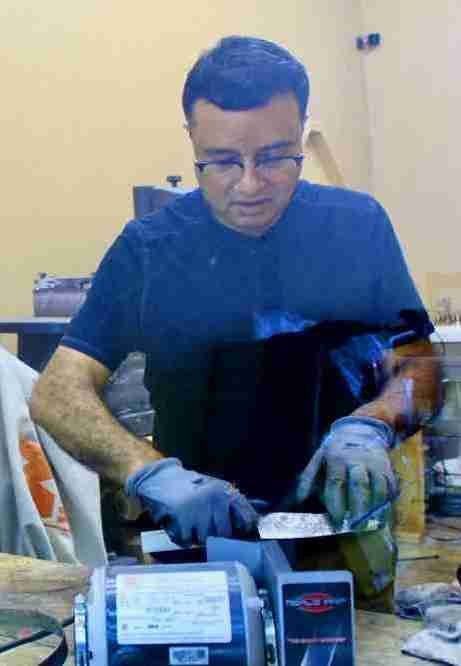
Akshaf Masroor
Is the founder of Texan Knives, a Texas-based company that makes handmade knives. With over 17 years of hands-on experience, he creates Damascus steel knives, custom designs, and runs sharpening programs. Akshaf’s knives are strong, sharp, and built for real use. Read More